A quick guide to installing Daikin heat pumps
We explore the complexities of installing a Daikin split heat pump system, so you know exactly what to expect. From selecting the location to making the electrical connections, we'll explain everything you need to know.

Have you ever wondered whether installing a split heat pump system is as complicated as assembling flat-pack furniture with baffling instructions or as straightforward as changing a lightbulb? Indeed, many of us ask ourselves this when considering a switch to energy-efficient, comfortable home solutions using cutting-edge technology. So, is this really a weekend DIY project that only needs a few tools and determination, or would it be wiser to call in professionals to avoid turning your home into a failed science experiment? Here’s what you need to know.
What a split heat pump system involves
A split heat pump system is a climate control solution that uses energy from the outdoor air to provide heating, cooling, and domestic hot water for homes. It uses a heat pump to extract thermal energy from the outside air, even at low temperatures, and then convert it in order to heat or cool the indoor space or water.
This technology consists of at least two units: an outdoor unit and one or more indoor units, connected together. The split system is the indoor unit where air is delivered at the desired temperature.
What are the key elements to keep in mind when installing a Daikin split heat pump system?
Split heat pump systems typically include the following components:
Outdoor unit
This unit captures thermal energy from the outside air. Installed outdoors, it houses the compressor, evaporator, and other essential components.
Indoor unit
Or rather indoor units, since you can install as many as you need, even in every room you wish to climate control. Our indoor units come in a range of designs, so you’re sure to find one that fits your space perfectly:
- The wall-mounted units come in various sizes and colours to match your interior.
- Floor-standing units replace traditional radiators. With their sleek lines, they blend seamlessly into your home décor.
- Ducted units are hidden in false ceilings. You only see the grille, where the air flows out.
Domestic hot water tank
An efficient, modern way to supply hot water at home, combining technological innovation with comfort and sustainability.
Thermostat or controller
This allows you to select your preferred temperature and operate the system efficiently.
What should you know before installing a Daikin heat pump system?
Installing an air-to-air heat pump appliance is definitely a smart move if you’re looking for energy efficiency and comfort at home. But, as with any major decision, there are a few factors to consider before diving in headfirst. Although we covered it in detail in this article, here’s a list of key points to help ensure your heat pump investment is a complete success:
Understand your home's needs: No two homes are the same, so what works for one might not suit another. Consider your home's size, existing insulation, and specific heating and cooling requirements.
Decide how many rooms you want to climate control: Split heat pump systems are designed for a single room. If you want climate control in several rooms, you’ll need a Multi-split system. A “Multi-+” heat pump appliance also allows connection to a small 90 L or 120 L domestic hot water tank, ideal for homes up to 80 m².
Choose a high-quality heat pump system that’s reliable and long-lasting: That way, you'll ensure your investment pays for itself within a few years.
A constant electricity supply is needed to operate the system: Air-to-air heat pumps obtain 80% of their energy from the outdoor air. Only 20% comes from electricity.
Contact a professional installer: they’ll provide a quote tailored to your home and needs.
La instalación de un equipo de aerotermia tipo split (también conocido como "aire acondicionado") es un proceso especializado. Debe llevarla a cabo un profesional que pueda asesorarte sobre la idoneidad y las especificaciones e instalar unidades de calidad con el mínimo trastorno para lograr la máxima eficacia.
¿Cómo funciona la instalación de un equipo de aerotermia tipo split?
La instalación de un equipo de aerotermia tipo split consta de seis pasos principales:
- Paso 1: Instalación de la(s) unidad(es) interior(es) del equipo de aerotermia. En primer lugar, el instalador instalará las unidades interiores del equipo de aerotermia, de pared, de suelo o de conductos, que están diseñadas para emitir aire caliente o frío en las estancias.
- Paso 2: Instalación de puntos de acceso en el interior de tu casa. A continuación, creará un punto o puntos de acceso para conectar la unidad o unidades interiores a la unidad exterior taladrando un agujero en la pared para el cableado eléctrico y las tuberías de drenaje.
- Paso 3: Instalación de la unidad exterior del equipo de aerotermia. A continuación, instalará la unidad exterior del equipo de aerotermia. En lugares más fríos, la unidad debe estar alejada del suelo, por encima de donde pueda depositarse nieve.
- Paso 4: Conexión del cableado eléctrico. Después, conectará el cableado eléctrico. Los cables deben aislarse según convenga.
- Paso 5: Conexión de las tuberías. Unirá las tuberías de refrigerante que transportan el gas caliente o el líquido frío a las unidades interiores y las tuberías de drenaje que eliminan la condensación. También deberán aislarse según convenga.
- Paso 6: Fase de pruebas de calidad. Por último, realizarán pruebas exhaustivas de todo el sistema para asegurarse de que funciona de forma óptima antes de utilizarlo.

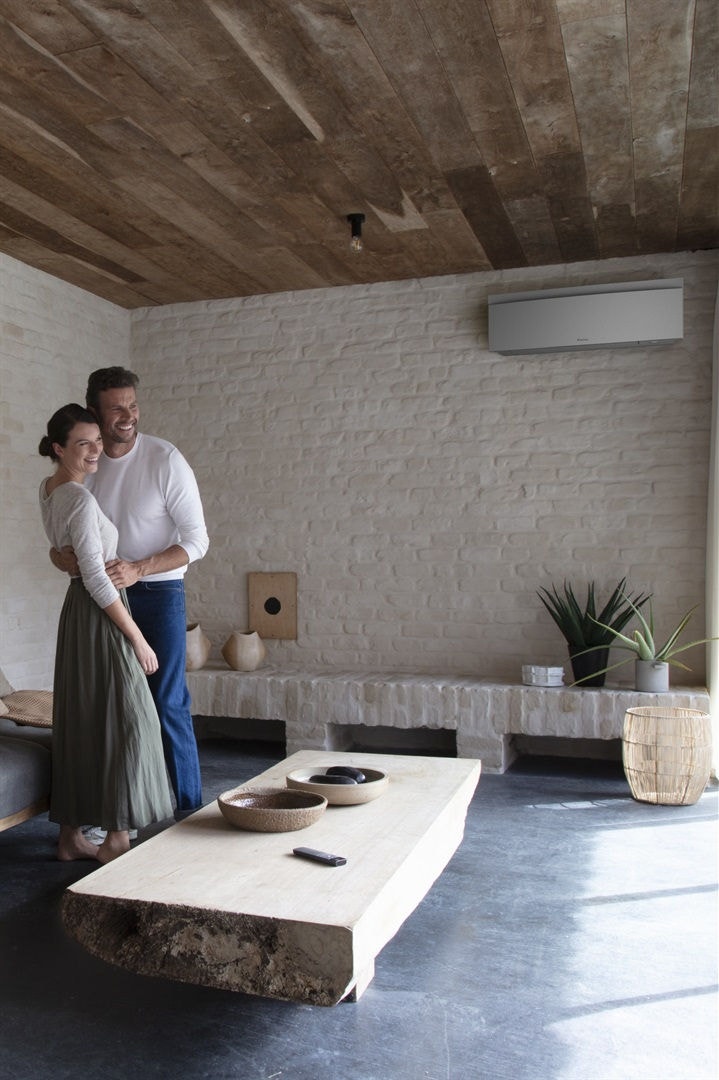
Leave your heat pump installation to a professional
Leaving the installation of your Daikin heat pump to a professional not only gives you peace of mind that your system will operate at full potential, but also lets you enjoy unmatched comfort at home, confident you’ve made a responsible choice for the environment.
The process starts with a careful assessment of your home. Using their trained eye and technical knowledge, the installer will conduct a detailed inspection to determine if your property is ideal for a split heat pump appliance. This step is crucial, as factors such as the house's orientation, insulation, and available space can significantly affect system performance.
Following the assessment, the installer will provide a personalised recommendation on the system best suited to your needs. Making the right choice ensures your system isn’t over- or underworked, allowing you to enjoy efficient, sustainable comfort.
Another important consideration is where to place the outdoor unit. The installer will advise you on the best location, taking into account exposure to sunlight, access for maintenance, the building’s appearance, and minimising noise for you and your neighbours.
The decision regarding the indoor units will depend on your aesthetic preferences and the climate control needs of each space. Good advice at this stage ensures heat or cool air is distributed evenly and effectively throughout your home.
At Daikin, we’re committed to guiding you every step of the way, offering innovative solutions and expert advice. By installing your heat pump appliance, you’re not only improving comfort in your home, but also helping create a greener world for future generations.
Ready to take the plunge? Trust the professionals, choose efficiency, and embrace a more sustainable future with heat pump technology.

