What type of maintenance an air conditioner requires (and why you shouldn’t put it off)
Check your air conditioning system before it fails. Here we'll explain the risks of failing to do so, and how to extend its lifespan.

Air conditioning is now so commonplace in homes, offices, and commercial properties that we often overlook the need for regular maintenance, just like with any other appliance. Until, of course, one day it stops cooling just when you need it most. Or it starts to give off a strange smell. Or it becomes noisier than usual. And then we remember that all-important detail: to keep it working properly, it needs regular care.
In this article, I’ll give you some clear, practical advice on everything you need to know about maintaining air conditioning systems. No unnecessary jargon, just the important stuff: why it's crucial, what risks you run if you neglect it, how often you should check it, what types of maintenance there are, and how to identify when your system is crying out for help.
And yes, I’ll also tell you why Daikin, a leading brand in the sector, is a reliable choice for those seeking efficiency and peace of mind.
Why is maintaining air conditioning important?
Let's start with the obvious: Maintaining your air conditioning isn’t a luxury or an unnecessary expense. It’s an investment in health, savings, and longevity.
Here are the main reasons why you should take it seriously:
1. It improves performance
With use and time, air conditioning collects dust, dirt, and moisture in its filters, ducts, and coils. This means it has to work harder to achieve the same result. With proper maintenance, the system runs more efficiently, heats or cools better, and uses less energy.
2. It extends the unit's lifespan
With good maintenance, an appliance can last for many more years without major breakdowns. And considering the high cost of a new air conditioning unit, anything that extends the life of your current one is more than welcome.
3. It improves air quality
Did you know that a dirty filter can become a breeding ground for bacteria, unpleasant odours, mould, and dust? If left uncleaned, that’s what you and your family will be breathing. Proper maintenance improves indoor air quality, which is especially important if children, older people, or allergy sufferers live in the home.

4. It prevents expensive, troublesome breakdowns
Most serious breakdowns could be avoided with regular maintenance. A simple annual checkup can catch problems early, potentially saving you from significant expenses later on.
So what happens if I don't perform regular maintenance?
Good question. Because when it comes to maintenance, many people think, “Well, if I don't touch it, it'll be fine.” Wrong. What you can’t see still matters. And doing nothing also has consequences.
Here are some of the most common risks of neglecting air conditioning maintenance:
Soaring electricity consumption: the system loses efficiency and uses more energy to heat or cool the same space. You’ll end up seeing this on your bill.
Frequent breakdowns: without proper cleaning or checkups, parts wear out and eventually fail. And repairing compressors or electronic components can be costly.
Unpleasant odours: mould and accumulated moisture can cause unpleasant odours when switching the appliance on.
Poorer air quality: a dirty filter spreads allergens, dust, and microbes throughout the room.
Too much noise: fans become misaligned, parts rub together… and quiet operation is lost.
Loss of warranty: many brands make the warranty for the equipment conditional on servicing it at least once a year.
Types of maintenance: what does your system actually need?
Not all systems or situations need the same approach. However, we can generally distinguish between two types of maintenance:
1. Basic maintenance (which you can do yourself)
This involves simple tasks you can carry out without a service technician or specialist tools.
Clean the filters: you can vacuum them or wash them with warm water and mild soap (just make sure you let them dry completely before putting them back). Everything is explained in this article.
Visually inspect the system: check there are no leaks, that the appliance isn’t making strange noises, and there are no loose parts.
Keep an eye on the surrounding area: make sure that the outdoor unit isn’t blocked by leaves, dust or debris, and that there’s plenty of space for ventilation.
2. Professional servicing (service technicians only)
Air conditioning systems should be serviced at least once a year, ideally before the summer or winter, depending on whether you use heating or cooling most. This includes:
Complete system check: general operation, condition of the electrical connections, refrigerant gas pressures, etc.
Deep cleaning: cleaning the coils, fans, drains, and interior trays, which cannot be done without first dismantling the unit.
Refrigerant gas check: if there’s been a leak or drop in pressure, the service technician can recharge it.
Measuring energy performance: to ensure your system remains efficient.
How often is maintenance needed?
The short answer: once a year.
The long answer: it depends on how much you use it, the type of system, and whether it’s installed in a home, office, or commercial property.
Here’s a quick guide:
Occasional home use (summer and winter): once a year.
Intensive home use (all year round): twice a year.
Commercial properties / offices: at least twice a year.
Environments with lots of dust or grease (kitchens, workshops, etc.): more frequent maintenance, possibly even every three months.
The best time to do it is before peak season. This will ensure you avoid any unpleasant surprises when you need it most.
How to know if your air conditioner needs maintenance
Your appliances will tell you. Sometimes quite literally. If your air conditioner is showing any of these signs, it probably needs a checkup:
It doesn’t cool or heat properly: this could be down to dirty filters, a lack of gas, or a problem with the sensors.
It’s making more noise than usual: if it was once quiet but now sounds like a car engine, then something isn’t quite right.
It gives off an unpleasant smell when you turn it on: a clear sign of mould or accumulated dirt.
It powers off or leaks water: this may indicate electrical faults or drainage issues.
Your electricity bill has risen unexpectedly: watch out for this, it often means the system is working harder than it should due to dirt or poor regulation.
Don’t wait for things to get worse. A timely checkup can save you hassle (and money).
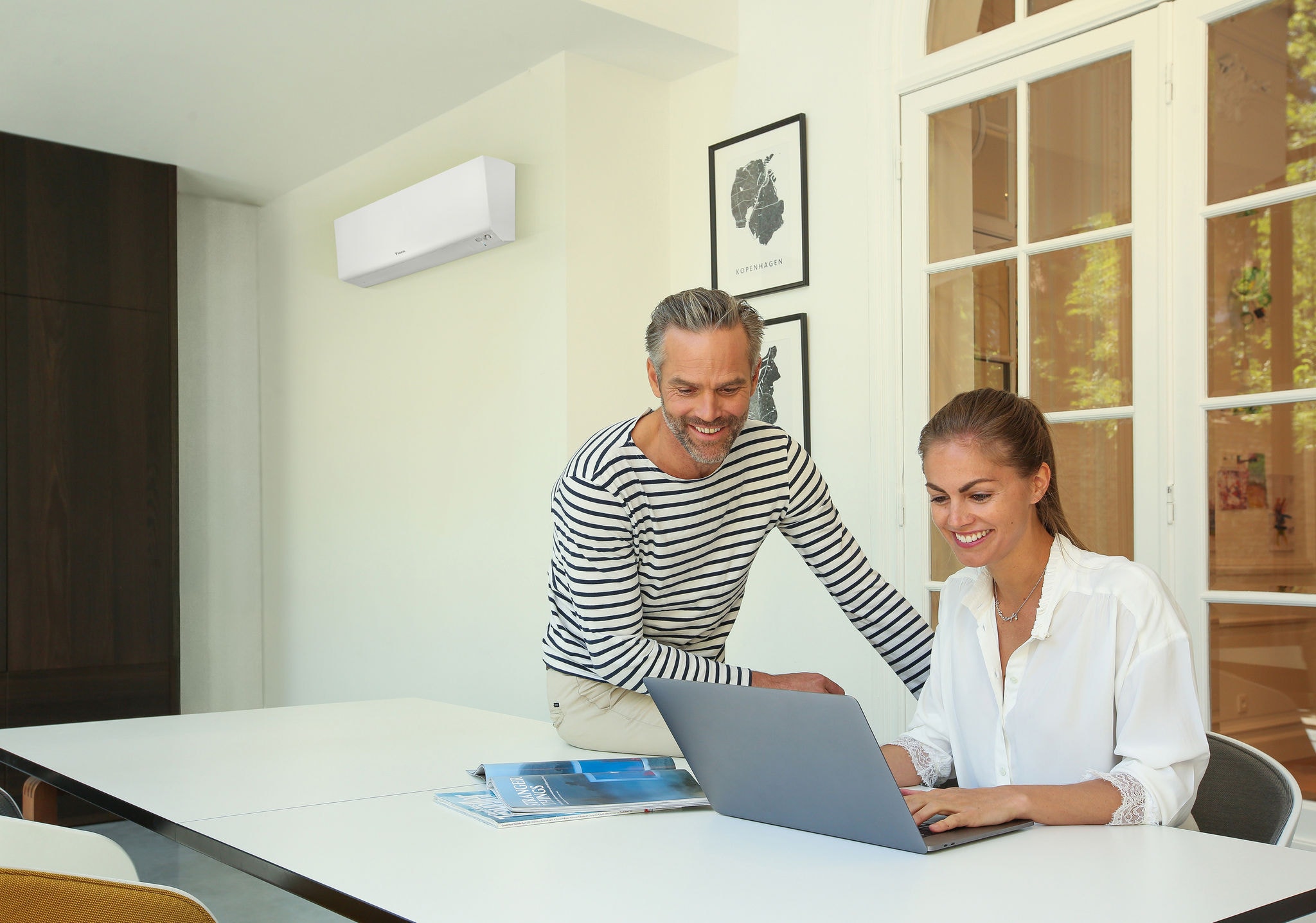
So why trust Daikin for your maintenance?
Now you know why keeping your air conditioning in good shape matters, let’s talk about who can help you do it properly. Because yes, there are plenty of companies offering maintenance, but not all provide the same quality of service.
This is where Daikin comes in.
Daikin is not just another brand. With over 90 years of global leadership in the climate control sector, one of its greatest assets is Stand By Me, its after-sales service. Daikin doesn’t just produce high-efficiency systems; it also ensures they keep working like new for many years.
Here are a few solid reasons to trust Daikin:
1. Specialist in-house technical service
Daikin has an official network of installers and service technicians who know their systems inside out. This ensures every job is done to the brand’s standards.
2. Original parts and accurate diagnostics
Original parts are used whenever something needs replacing. And specialist diagnostic tools will ensure any problems are identified at an early stage.
3. Tailored maintenance contracts
A variety of maintenance plans are available to suit your system and usage. From homes to industrial or commercial installations.
4. Prevention as a philosophy
Daikin is committed to a proactive approach, identifying any issues before they affect performance or cause breakdowns.
5. Committed to efficiency and the environment
Daikin systems are designed to save energy and cut emissions, with maintenance following the same philosophy: keeping your system clean and running smoothly, in order to consume less energy and last longer.
In short…
Air conditioning isn’t just another home appliance. It’s part of your everyday comfort. And like any complex technology, it needs care. Proper maintenance not only extends its lifespan, but also lets you breathe cleaner air, save energy, and avoid costly repairs.
Think of it like your car: you take it for a checkup even when it seems fine, right? It’s the same with air conditioning. Don’t wait until there’s a problem to act.
And if you want peace of mind, remember that trusting professionals like Daikin is the best way to ensure your system is in good hands. Because when it comes to climate control, the difference between "it's working" and "it's working well" lies in the details.
