Four mistakes that increase your heating consumption
Here we'll give you four tips to stop wasting energy and money while trying to keep your home warm during the winter.

You’ve probably experienced one of these two situations: you've set the maximum temperature but the heat isn't distributing properly, or, worse still, when the bill arrives, it seems like you've been heating the whole neighbourhood. Frustrating, isn’t it?
The good news is that it doesn’t have to be this way. Many of these problems come down to common mistakes we make without realising, or to the small details we tend to overlook. In this article, you'll find straightforward tips to optimise your use of heating, learn about common mistakes that increase consumption, and discover how to avoid them. With just a few adjustments, you can enjoy a warm, cosy home without placing a strain on your budget. Ready to transform your relationship with heating?
Know your heating (but don't expect miracles)
Whether you have traditional radiators, modern underfloor heating, or a heat pump system, understanding how each system operates is key in order to avoid wasting energy or money.
Each appliance has its own unique features. Radiators, for example, heat up quickly, but they need clear space around them for proper air circulation (and yes, that piece of furniture pressed against one definitely contributes to the problem).
Underfloor heating, on the other hand, is slower, but it keeps the heat steady and even, perfect for anyone who wants a moderate, constant temperature. And if you have a heat pump system, you're already achieving peak efficiency, as it's the most energy-efficient system when correctly sized for your home.
The key is not to expect the impossible. If, on a freezing cold day, you decide to set your thermostat to 30 °C in the hope your house will heat up faster, all you’ll do is make your system work flat out for longer, using more energy. The ideal temperature for comfort is around 20-22 °C. In this article we explain in detail what the ideal temperature is for each room during the winter.
Tips that really make a difference
1. Insulate your home like a professional (or almost)
No heating system can succeed if your home is draughty. Check your windows and doors. If you feel a draught, invest in draught excluders or sealants, which are cheap and easy to fit. Also try hanging thick or double curtains on your windows, as they help keep the heat inside.
2. Ventilate wisely
Are you one of those people who opens all the windows for half an hour “to air the room”? Wrong. In winter, efficient ventilation calls for a bit more strategy. Open just one or two windows for 5–10 minutes, enough time to refresh the air without letting all the heat out. And try to do it at midday or a bit later, when it’s usually a bit warmer.
3. Rearrange your furniture
You might have a super comfy sofa, but if it’s blocking a radiator, you’re not making the most of the heat. Leave all radiators clear, as they need space so warm air can flow across the room.
4. Use your thermostat as an ally
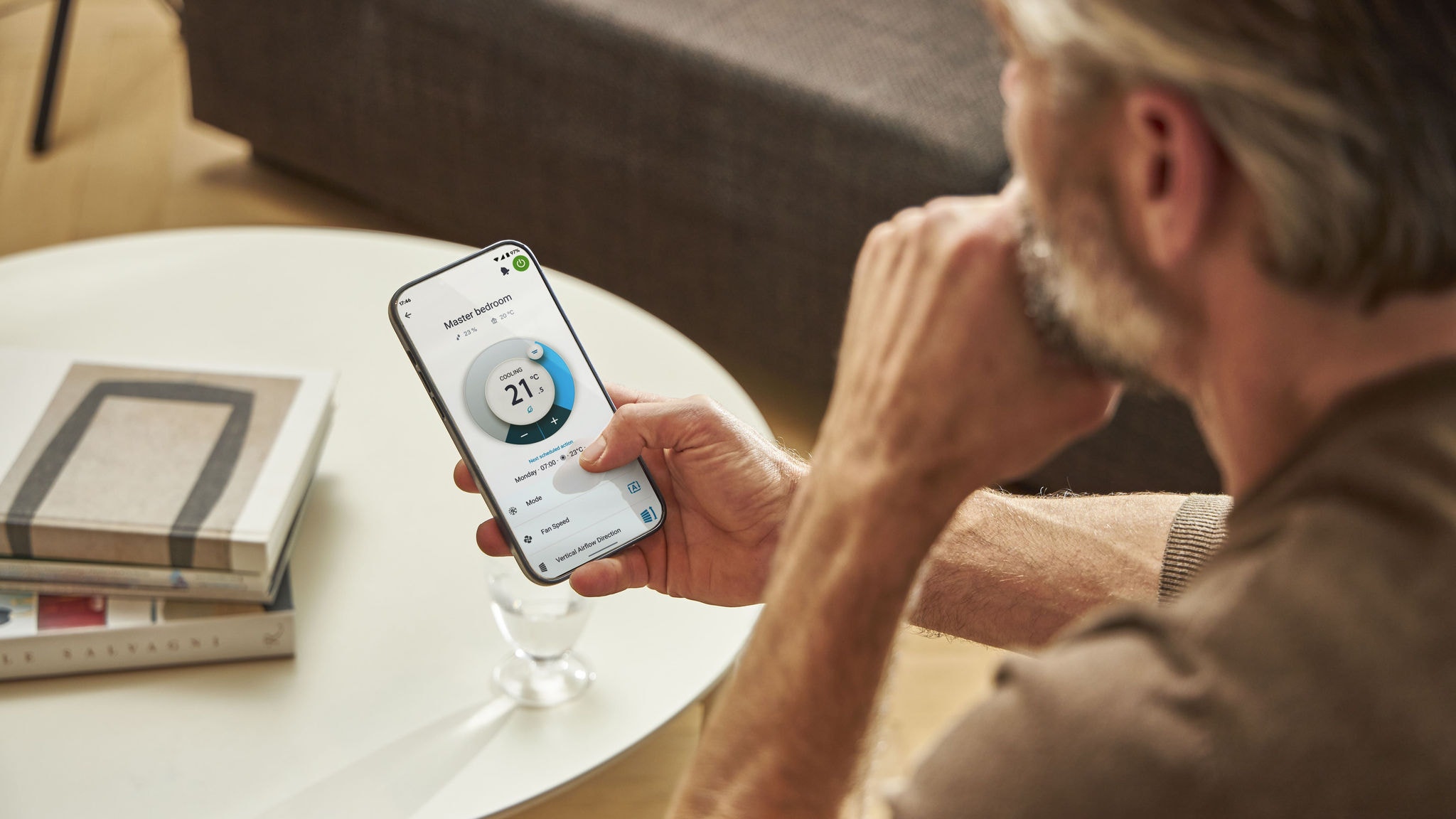
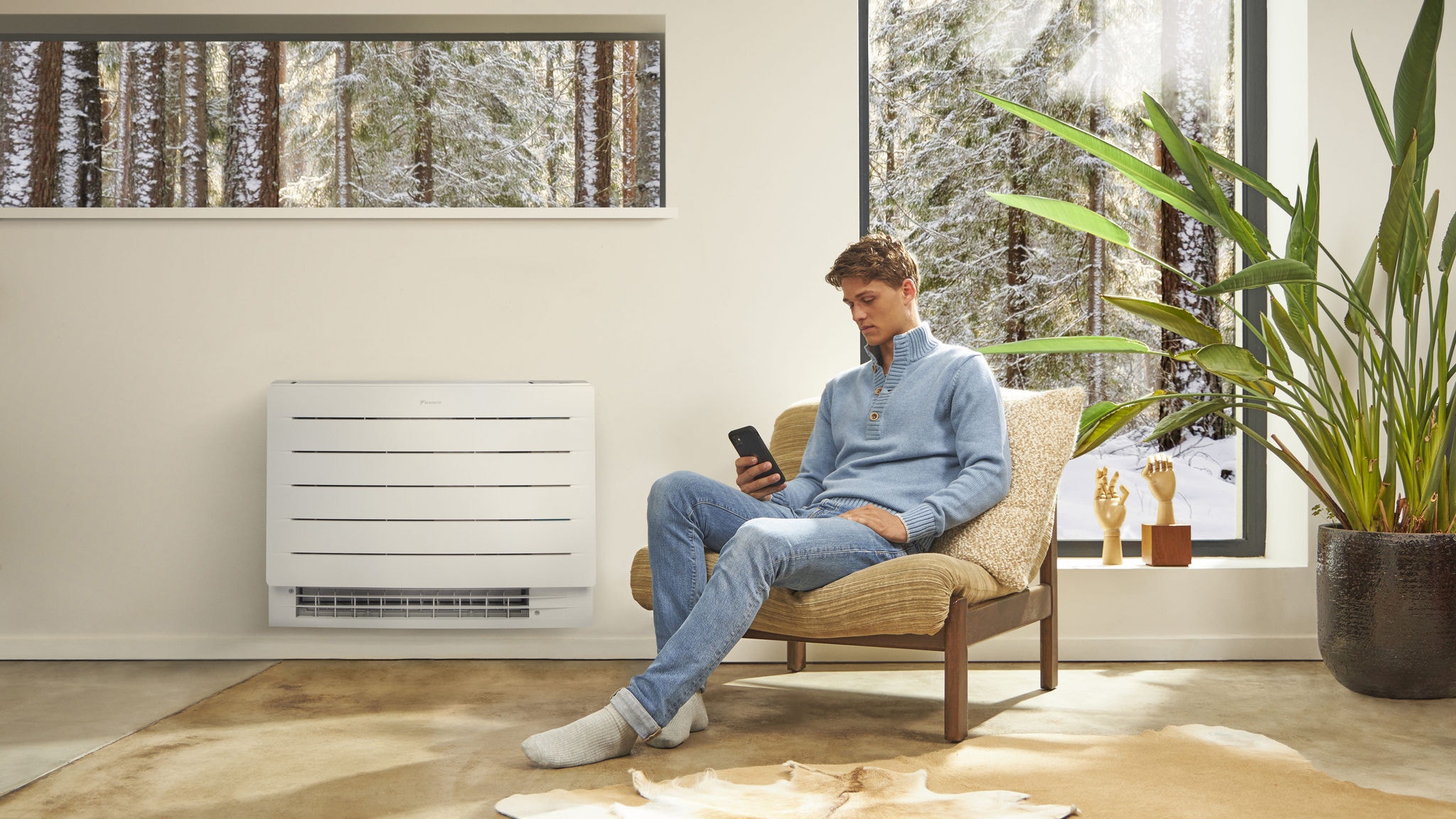
Learn how to programme your thermostat in order to keep your heating running efficiently. For example, set it to turn on just before you get home and off when you go to bed. For those with a set work schedule, using 'eco' settings or off-peak times can be a clever way to keep your energy costs down without sacrificing warmth.
Onecta is an app created by Daikin that allows you to control and monitor Daikin heating and air conditioning systems from anywhere, at any time. It’s compatible with appliances such as Altherma heat pumps and Altherma gas boilers. Simply connect your unit to the Wi-Fi and download the app to control your thermostat.
The four typical mistakes you’ll never make again
We’ve all made these mistakes at some point; the key to enjoying efficient heating is to learn from them and avoid any repetition. Here’s a quick look at the most common blunders, the ones that make your heating work overtime… and your bills shoot up.
Cranking up the temperature sky high: This one’s a classic. It’s cold, you get home and the first thing you do is set the thermostat to 28 °C hoping it’ll warm up faster. Spoiler alert: It doesn’t work like that. Heating systems work at a steady pace, so all you’re doing is making them run for longer than needed, using up more energy (and money).
Ignoring draughts: This is like trying to fill a bucket that’s full of holes. So check for any leaks and seal them. Never underestimate the power of good insulation for doors and windows.
Failing to perform maintenance: When radiators have trapped air, filters are dirty, or outdoor units aren't cleaned, your system can't run at its best... The outcome? Higher consumption and less heat. Inspect your system at the start of each winter and contact a professional to ensure everything is operating correctly. At Daikin, we offer maintenance plans for your equipment to keep it in top condition. Learn more about our maintenance packages here.
Obstructing your radiators (without even realising it): Putting furniture, curtains, or even damp washing on a radiator is basically sabotaging your own system. These obstacles stop heat from spreading evenly throughout your home, so it takes much longer for rooms to warm up.
Little mistakes like these when using heating can end up causing more problems than you might think. For a start, your bills will shoot up unnecessarily. And the planet will pay the price with higher CO2 emissions, especially if you’re not using renewable energy.
Optimising your heating is simple. By understanding your system, avoiding common errors, and applying a few simple tips, you can enjoy a warmer home, reduce your bills, and decrease your carbon footprint. It all starts with small changes that add up to a big difference.