Can a heat pump system be installed in a flat?
Installing aerothermal energy in your apartment or urban flat is possible and very simple thanks to our aerothermal climate control solutions, provided that the requirements for space, electrical power, and community regulations are met.

A heat pump system is an innovative technology that harnesses energy from the outside air to heat and cool indoor spaces, and can also supply domestic hot water, depending on the type of appliance. Although commonly associated with detached houses, it is indeed possible to install a heat pump system in a flat. Below, we outline the factors you should consider before beginning such an installation.
In an apartment, installation requires taking into account factors such as available space, contracted electrical power, and approval from the homeowners' association in accordance with the Condominium Law. In return, it offers clear benefits: estimated energy savings of 25–40%, year-round comfort, and reduced dependence on natural gas.
How does a heat pump system work in a flat?
A heat pump system operates through a thermodynamic cycle that extracts energy from the outside air and transfers it indoors to provide heating, cooling, and domestic hot water. This process is carried out by a heat pump, which uses electricity to transfer heat rather than generate it directly, resulting in a highly efficient system.
Regarded as one of the most efficient climate control systems, it's compatible with any type of property but offers greater savings in larger homes. This is mainly because heating or cooling a large space is more expensive, meaning savings are greater and installation costs are recovered more quickly. You can also install solar panels at home to reduce the heat pump system’s reliance on the electricity grid, as we already told you here.
However, while installing a heat pump system in a detached home may offer more benefits, it is still a viable option for flats. That said, several important factors need to be considered, including available space and thermal insulation.
Our recommendation is to consult an expert who’ll assess your specific situation and advise you on the best solution for your home.
Will my radiators work?
Whether a heat pump system is compatible with the existing radiators in your flat depends on several factors, primarily the type of radiators and their operating temperature. Heat pump systems are most efficient when combined with heating systems that operate at lower temperatures, such as underfloor heating or radiators specifically designed for low-temperature use.
Conventional high-temperature radiators: If your flat currently has radiators designed to operate at higher temperatures (such as those used in traditional central heating systems), you may require a high-temperature heat pump in order to switch to a heat pump system. These heat pumps can reach higher temperatures, but do so at the cost of efficiency.
Low-temperature radiators: These are ideal for use with a heat pump system, as they are designed to work efficiently at the more moderate temperatures (around 35–45°C) that heat pumps typically deliver.
Carrying out an assessment with a specialist technician is crucial to determine whether your current radiators can be adapted for a new heat pump system, or if opting for an alternative heating system, such as underfloor heating, would be more beneficial.


Appropriate electrical supply for installing a heat pump system in a flat
Determining the appropriate electrical supply for installing a heat pump system in a flat depends on several specific factors:
1. Calculating thermal demand
First, it’s essential to calculate the heating and cooling demand for the flat, which involves assessing:
Size of the flat: The total square metres requiring climate control.
Insulation: The quality of the flat’s thermal insulation has a significant impact on heating and cooling needs.
Windows: The size and type of windows, as poorly insulated windows can be a major source of heat loss.
Orientation and location: Exposure to sunlight and local climate conditions also affect thermal demand.
2. Choosing the heat pump system
After estimating the heat load, you can go ahead and select a heat pump system. The output of these systems is usually given in kilowatts (kW) and should match the calculated heating and cooling demand to avoid over- or undersizing. For example:
A small, well-insulated flat might only need 4–5 kW.
A larger flat or one with poorer insulation could require 6–10 kW or more.
3. Checking the power supply
It is crucial to check whether the flat’s current electrical supply can handle the additional load from the heat pump system. This includes:
Electrical panel capacity: Check whether electrical panel can support the additional load without requiring an upgrade.
Overload protection: Ensure the system has appropriate circuit breakers capable of handling the heat pump’s power requirements.
What types of heat pump system can I install?
When considering installing a heat pump system, various types are available to suit different needs and preferences. Some of the most popular options for installation in your flat include:
Daikin Altherma - Air-to-water heat pump system: This all-in-one system provides not only heating and air conditioning, but also domestic hot water (DHW). It works by having the outdoor unit extract energy from the air and, through a refrigerant cycle, raise this energy to a higher temperature for heating or lower it for cooling. It’s also one of the easiest systems to install, making it a practical, efficient choice for the home. Heating and air conditioning can be delivered through underfloor heating/cooling, fan coils, or radiators (heating).
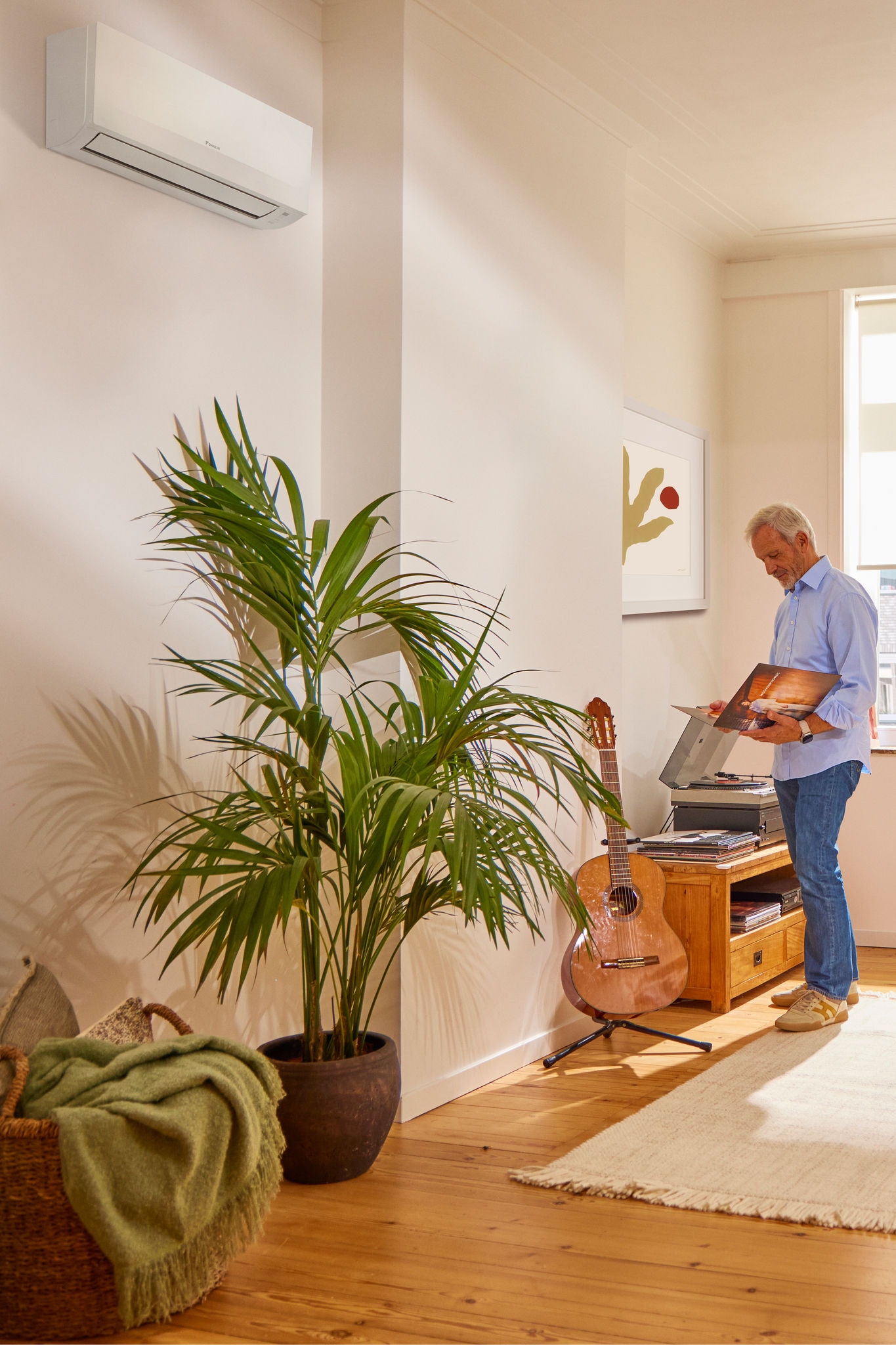
Split Heat Pump Systems - Air-to-air heat pump system: These systems ensure year-round comfort in your home, whatever the weather outside. As with the previous system, the outdoor unit captures energy from the outside air. It then uses the refrigerant cycle to adjust this energy’s temperature before releasing it indoors via the indoor unit. This system is ideal for those seeking an efficient heating and cooling solution without hot water. The outdoor unit can be installed on a balcony, external wall, or on the roof, while the indoor units are wall-mounted to optimise limited space. A hot water tank can be added to these systems to supply hot water and eliminate the need for gas. This type of solution is known as Multi+.
Both systems are effective solutions for improving home comfort, reducing environmental impact, and optimising energy use. Which one you choose will depend on your specific requirements and the characteristics of your flat.

Requirements for installing a heat pump system in a flat
Certain requirements must be met in order to install a heat pump system in your flat.
Available space: You must have enough space to install both the heat pump system's indoor and outdoor units. Typically, the outdoor unit is installed on the roof, balcony, or in a communal area of the building, while the indoor unit requires a designated location within the flat that does not obstruct movement and allows a straightforward connection to the heat distribution system. The indoor unit, meanwhile, is similar to any other appliance and, in the case of the integrated Daikin Altherma system, can be combined with the kitchen units.
Permits and legislation: Ensure you obtain any necessary licences and always comply with local regulations. These may include permits from the local council and your building’s residents’ association.
Structural compatibility: Ensure that the building’s structure can support the installation of the outdoor unit.
Access to utilities: Easy access to the electricity network and, in some cases, the water supply, is required.
Work with a qualified technical team: It’s vital to hire professionals experienced in installing heat pump systems. At Daikin, our team of certified, trained service technicians ensures your system is installed and maintained to the highest standards. We’ll make sure the entire process complies with all technical and safety regulations, while providing ongoing, tailored support to maximise the system’s efficiency and lifespan.
In short, installing a heat pump system in a flat is entirely feasible and offers numerous benefits, such as energy savings and sustainability. However, it does require careful planning and may mean making some changes to the existing infrastructure. With the right information and expert advice, you’ll be able to enjoy an efficient, environmentally friendly solution.