


DucoBox_Energy_Comfort_Premium_B2B_Product catalogue_ECPEN21-797_English
PDF | 2.37MB

In a completely sealed room within a building, air cannot easily enter or exit, so contaminants remain and accumulate. This can negatively affect the room's occupants. Ventilation is essential to reduce and eliminate these airborne contaminants.
A well-maintained ventilation system and an appropriate air exchange rate have proven to be an effective solution for protecting people from contaminants, including viruses.
CO₂ is a gas present in the air that is produced by any living organism when it breathes. The average concentration of CO₂ in ambient air is between 300 and 400 ppm.

This is the ratio of the partial pressure of water vapour to the equilibrium vapour pressure of water at a given temperature.
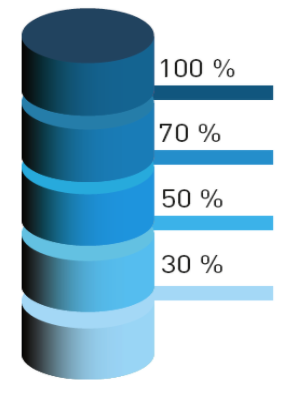
If humidity levels are above 70% you run the risk of:

If humidity levels are below 30% you run the risk of:

Concept Of 'Centralized Heat Recovery Ventilation' (CHRV)

An automated detection of when to ventilate, where to ventilate (day-zone or night-zone) and how much to ventilate is available thanks to CO2 and humidity sensors that closely monitor the occupant’s presence and activity.
Controlling both zones independently with an integrated valve substantially reduces the consumption of EC fans, resulting in a higher energy consumption reduction and an A+ energy label.
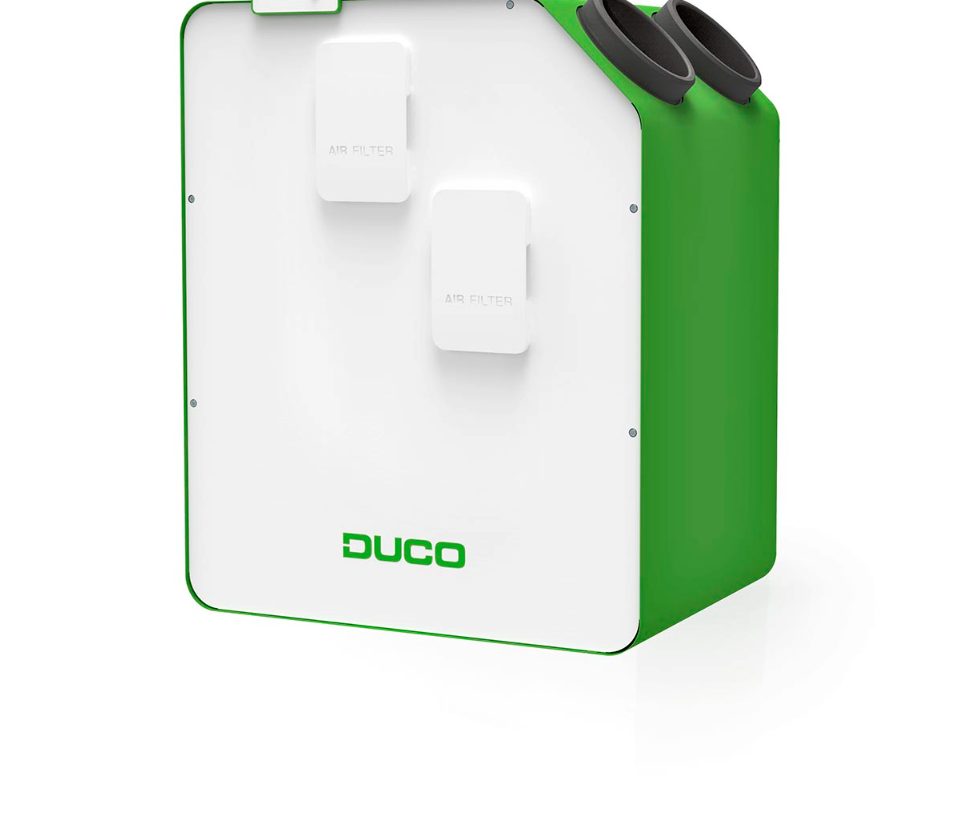
Complete range of Centralized Heat Recovery Ventilation (CHRV) units, ducts & accessories.
The room is only ventilated when necessary and in the correct amount. CO2 concentration and air humidity are used as indicators. This helps avoiding unnecessary heat loss while guaranteeing an optimal indoor climate.
Quiet ventilation systems create a comfortable indoor climate. DUCO excels in acoustics for both supply and exhaust air.
Automatic calibration, which uses constant pressure calibration principles for measurement and adjustment, always delivers a 100% guaranteed high-quality result and translates into a 50% time savings for the installer.
Thanks to the communication card, DUCO ventilation systems can communicate via Modbus and/or Ethernet. Modbus integration allows them to be linked to a building management system.
The combination of dynamic air distribution filters and high-performance heat exchangers results in a very high efficiency ratio.

Thanks to DUCO, Daikin offers Centralized HRV systems with an integrated 2-zone valve. With the 2-zone version of the DucoBox Energy Premium, Daikin’s product range is extended to a unique ventilation system with embedded 2-zone control. If a certain area of your house does not require ventilation, that area is not ventilated. Cost savings on heating, lower consumption and noise comfort of the unit itself (lower rpm) are the logical consequences.
Sensors meticulously detect the residents’ movements throughout the home. This makes it possible to automatically determine where, when and in what amount ventilation is required.
By controlling the two zones independently using an integrated valve, the consumption of the EC fans is considerably reduced, resulting in an A+ energy rating.
Quietest ventilation system on the market on the supply side


